
A Bible is often the one book a family keeps for decades, passed from parent to child with margin notes and dates written inside the front cover. A full grain leather Bible cover protects that book the way it deserves to be protected, and unlike cheaper covers, it's built to last as long as the Bible itself.
Here's what actually makes a leather Bible cover worth choosing, why it makes a gift that holds up far longer than most, and how to tell a genuine full grain cover apart from one that only looks the part.
Why a Bible Cover Deserves the Same Care as the Book Inside
A Bible gets carried to church, tucked into bags, stacked on nightstands, and handled daily for years, sometimes for a lifetime. A flimsy cover made from vinyl or bonded material cracks, peels, and discolors within a few years of that kind of handling, leaving the book itself exposed right when it's been carried the longest.
A cover built from real, full grain leather is designed for exactly that kind of sustained, everyday handling. It's meant to be used constantly, not preserved behind glass, and it holds up to that use instead of failing under it.
How to Tell the Difference by Sight and Touch
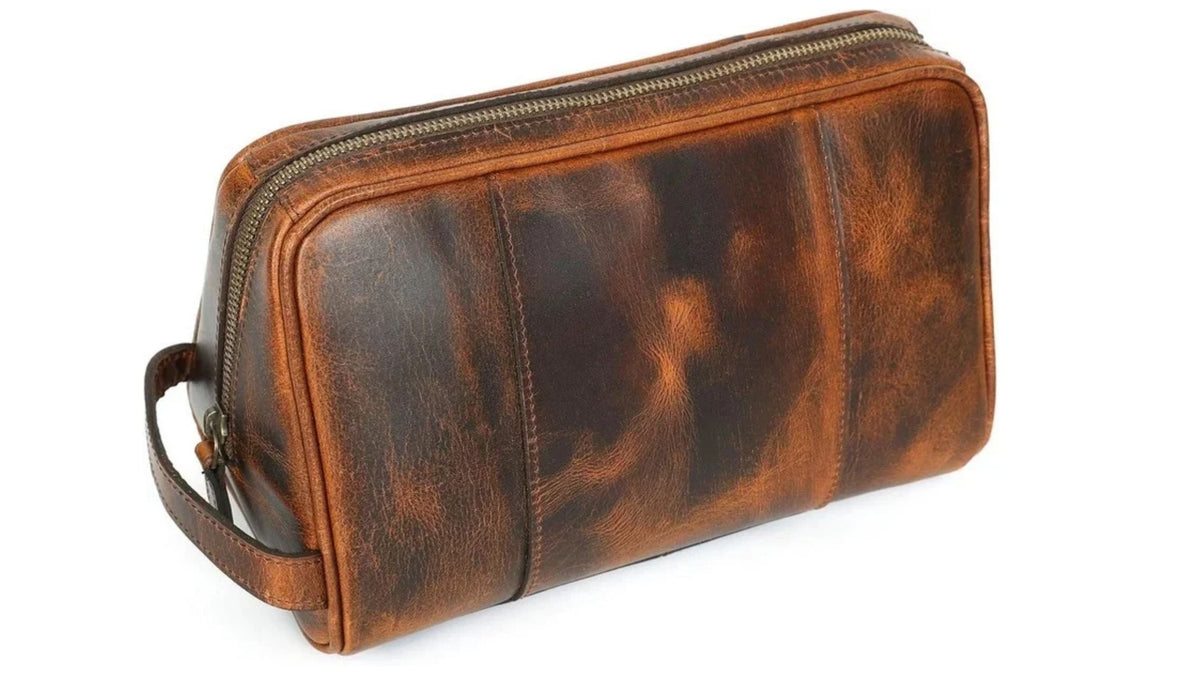
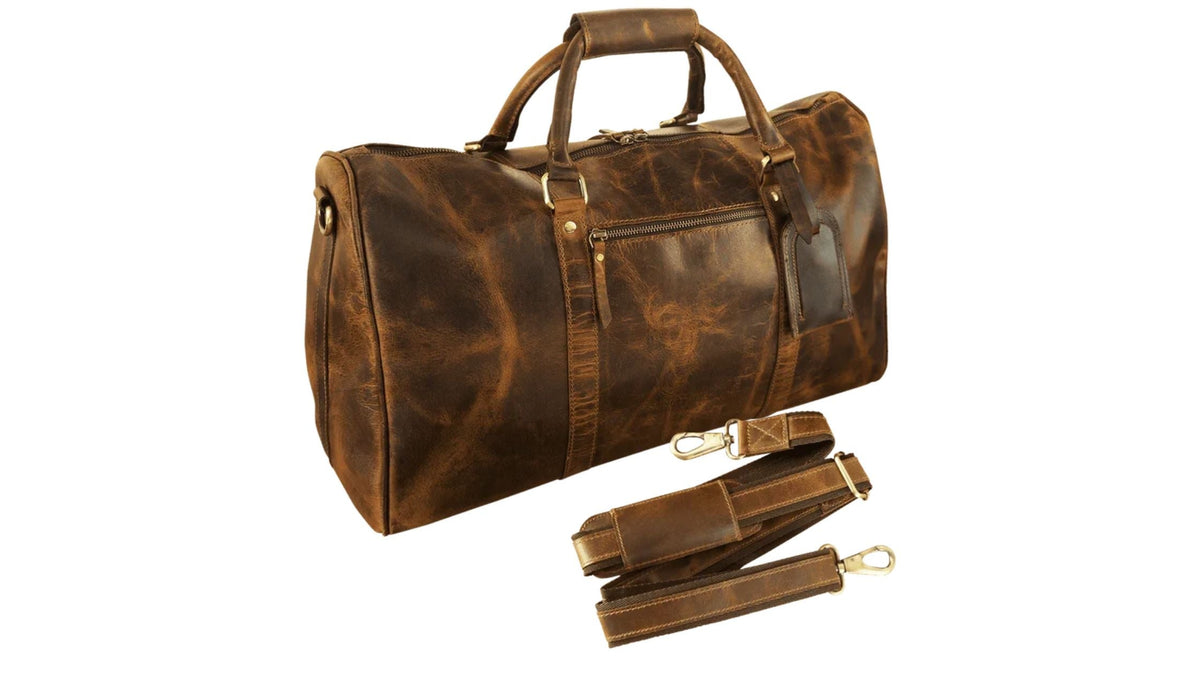
A quick visual check goes a long way. Full grain leather shows subtle, natural variation across its surface, faint marks, slightly uneven texture, small imperfections that are part of the hide rather than flaws. A surface that looks perfectly smooth and identical from edge to edge has usually been sanded and coated, which is a sign of a lower leather grade rather than a higher one.
Touch matters too. Full grain leather has a slightly textured, supple hand feel, and it gives gently under light pressure before returning to shape. Coated or corrected leather tends to feel more rigid and uniformly smooth, closer to a treated fabric than to natural hide.
What Makes a Full Grain Leather Bible Cover Different
Full grain leather uses the top, strongest layer of the hide, with the natural grain left completely intact. That's the layer with the densest fiber structure, which is what gives full grain leather its resistance to tearing and its ability to flex at a fold, like a Bible cover's spine, without cracking.
Lower grades of leather, often labeled simply “genuine,” are cut from the layers beneath that top surface, then treated and stamped to look consistent. They can look similar on a shelf, but they don't hold up the same way to years of opening, closing, and carrying.
The Features That Actually Matter in a Bible Cover
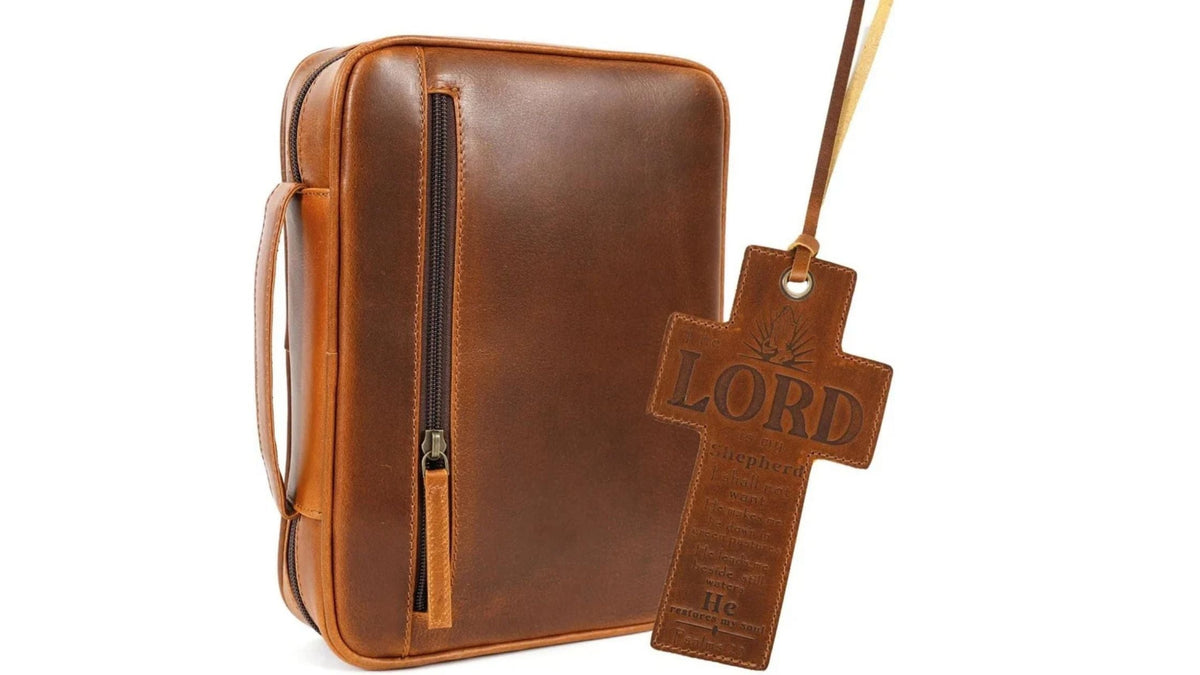
A well-designed leather Bible cover, like the Cross Leather Bible Cover , includes smooth-gliding zippers that won't snag or jam over years of use, interior pockets and pen loops that keep study materials organized, and a sturdy handle for carrying the Bible to and from church without straining the cover itself.
Fit matters just as much as features. A cover sized for the wrong Bible either won't close properly or will leave the book loose inside, so checking the dimensions against the specific Bible it's meant to protect is worth the extra few minutes before buying.
Why Families Choose Leather Covers for Heirloom Bibles
Many families keep a single Bible for decades, recording births, weddings, and other milestones inside its front pages. That kind of heirloom deserves a cover that will still be intact when it's eventually passed to the next generation, not one that needs replacing every few years while the book inside stays constant.
A full grain leather cover is built with exactly that kind of longevity in mind. It's designed to be opened daily for years without the zippers jamming, the seams splitting, or the surface cracking, so the cover can genuinely outlast the person who first purchased it and continue protecting the same Bible for the family members who come after.
A Gift That Ages Instead of Wearing Out
Full grain leather develops a patina over time, darkening slightly and picking up subtle character from handling, light, and use. That means a Bible cover given as a gift today will look richer and more personal in ten years than it does on the day it's unwrapped, rather than looking worn out and dated.
That quality is part of what makes a full grain leather Bible cover a meaningful gift for confirmations, graduations, weddings, or any occasion tied to faith. It's built to be handed down, not replaced, and it ages alongside the person carrying it, gathering a bit more character with every service, every study session, and every year it's used.
Full Grain vs Genuine Leather: What the Label Doesn't Tell You
As leather specialists at Ezra Arthur explain, “genuine leather” is real leather, but it's actually one of the lower grades available, made from the layers left over once the full grain top has been split away and finished to look more uniform. Full grain leather keeps the grain exactly as it comes off the hide, which is why it holds up to years of folding and handling in a way genuine leather typically cannot match.
When comparing Bible covers, it's worth asking directly whether the leather is full grain rather than assuming the word “leather” on its own tells the full story.
A Quick Checklist Before You Buy
Before choosing a Bible cover, confirm the leather is described as full grain rather than simply “leather” or “genuine leather,” measure your Bible's exact dimensions against the product's size chart, check that the zipper glides smoothly without catching, and consider whether interior pockets and a pen loop matter for how the Bible will actually be used.
Taking a few minutes to confirm these details before buying avoids the more common disappointment of a cover that looks right in a photo but doesn't fit the Bible it was meant for, or that starts to show wear within the first year of regular use.
Caring for a Leather Bible Cover
A full grain leather Bible cover needs very little upkeep. Wipe it down occasionally with a soft, dry cloth to remove dust, and keep it away from prolonged direct sunlight or damp storage, which can dry out or discolor the leather over time.
Applying a light leather conditioner once or twice a year helps keep the material supple, particularly at the spine, where the cover flexes most often. Beyond that, regular use, carrying it to and from church, opening and closing it daily, is exactly what allows the leather to soften and develop its patina naturally.
Occasions Where a Leather Bible Cover Makes a Meaningful Gift
A full grain leather Bible cover fits naturally into a handful of milestone occasions: a confirmation, a baptism, a graduation, a wedding, or simply a birthday for someone who carries their Bible regularly. Unlike most gifts tied to those occasions, it's something the recipient will actually use every week for years, rather than something set aside after the celebration ends.
Personalization options, like initials stamped into the leather or a name embossed on the front, add a layer of meaning that a mass-produced cover can't match. Combined with the natural aging process of full grain leather, a personalized cover becomes more sentimental with time rather than less, which is part of what makes it a gift people remember long after it's given.
Choosing the Right Size and Style
Leather Bible covers typically come in a few standard sizes, so measuring the specific Bible it needs to hold, length, width, and thickness, is the first step before choosing between options like the Large Leather Bible Cover in brown or the Large Leather Bible Cover in black.
Beyond size, think about how the cover will actually be used. Someone who studies frequently may want extra interior pockets and pen loops, while someone who mainly carries their Bible to weekly service may prioritize a sturdy handle and a simple, classic design.
For a more compact option, a style like the Small Leather Bible Case suits smaller Bibles or study Bibles carried more casually, while a case such as the Large Leather Bible Case fits bulkier study editions with room to spare for notes or a small devotional alongside the main text.
Why Craftsmanship Shows Up Most at the Edges
The overall look of a Bible cover can be deceiving from a distance, but the edges tell the real story. On a well-made full grain leather cover, the edges are burnished or finished by hand, giving them a smooth, rounded feel rather than a raw, cut edge that frays with repeated handling.
That level of finishing takes more time and skill to produce, which is part of why it's worth paying attention to before buying. A cover with clean, finished edges is a strong sign that the same care went into the stitching, the zippers, and the leather selection throughout the rest of the piece.
The Tradition Behind Leather Book Protection
Leather has been used to bind and protect important books for centuries, long before it became a design choice rather than a necessity. Vellum and leather bindings were prized specifically because they held up to repeated handling in a way that paper and cloth covers simply could not, protecting texts that were often the only copy a household or congregation owned.
A modern full grain leather Bible cover carries that same practical logic forward. It's not a decorative afterthought, it's a direct continuation of a very old, very practical idea: that a book meant to be read for a lifetime deserves a cover built to survive that same lifetime alongside it.
What to Ask Before Buying a Bible Cover as a Gift
If you're buying a Bible cover for someone else, a little research beforehand goes a long way. Confirm the exact Bible edition and its dimensions if possible, since a cover that's a close but imperfect fit can be more frustrating than helpful. Consider whether the recipient studies at home, carries their Bible to services weekly, or both, since that affects which features, pockets, pen loops, a handle, will actually get used.
It's also worth deciding early whether a personalized touch, initials, a name, or a meaningful date, fits the occasion. That kind of detail takes a well-made cover and turns it into something closer to an heirloom from the moment it's given, rather than something that only becomes sentimental after years of use.
Conclusion
A full grain leather Bible cover does more than protect a book. It's built to be carried for years, to age gracefully rather than wear out, and to eventually become part of the story of the Bible it protects. That combination of durability and meaning is exactly what makes it a gift that lasts generations rather than a few years.
Carry Elizo
Elizo's Leather Bible Covers Collection is handcrafted from premium full grain leather, designed with the durability and thoughtful details a Bible carried daily actually needs. From the inlaid cross design on the Cross Leather Bible Cover to the classic simplicity of the Large Leather Bible Cover, each piece is built to protect and honor a book meant to be kept for a lifetime.
For anyone looking to protect other treasured books as well, explore Elizo's broader Leather Book Cover Collection and find a cover built to last as long as what's inside it.
Frequently Asked Questions
Q: What size Bible cover do I need?
A: Measure your Bible's length, width, and thickness, then compare those measurements against the cover's size chart before buying, since sizes vary between styles.
Q: Is full grain leather better than genuine leather for a Bible cover?
A: Yes. Full grain leather is the stronger, more durable grade, made from the top layer of the hide, and it holds up better to years of daily opening and closing than genuine leather.
Q: How do I clean a leather Bible cover?
A: Wipe it with a soft, dry cloth to remove dust, and apply a leather conditioner once or twice a year to keep the material supple.
Q: Does a leather Bible cover make a good gift?
A: Yes. A full grain leather Bible cover ages well rather than wearing out, which makes it a meaningful, lasting gift for confirmations, graduations, or other milestone occasions.
Q: Will a leather Bible cover change color over time?
A: Yes, slightly. Full grain leather darkens and develops a natural patina with handling and light exposure, which most people consider part of its appeal.