
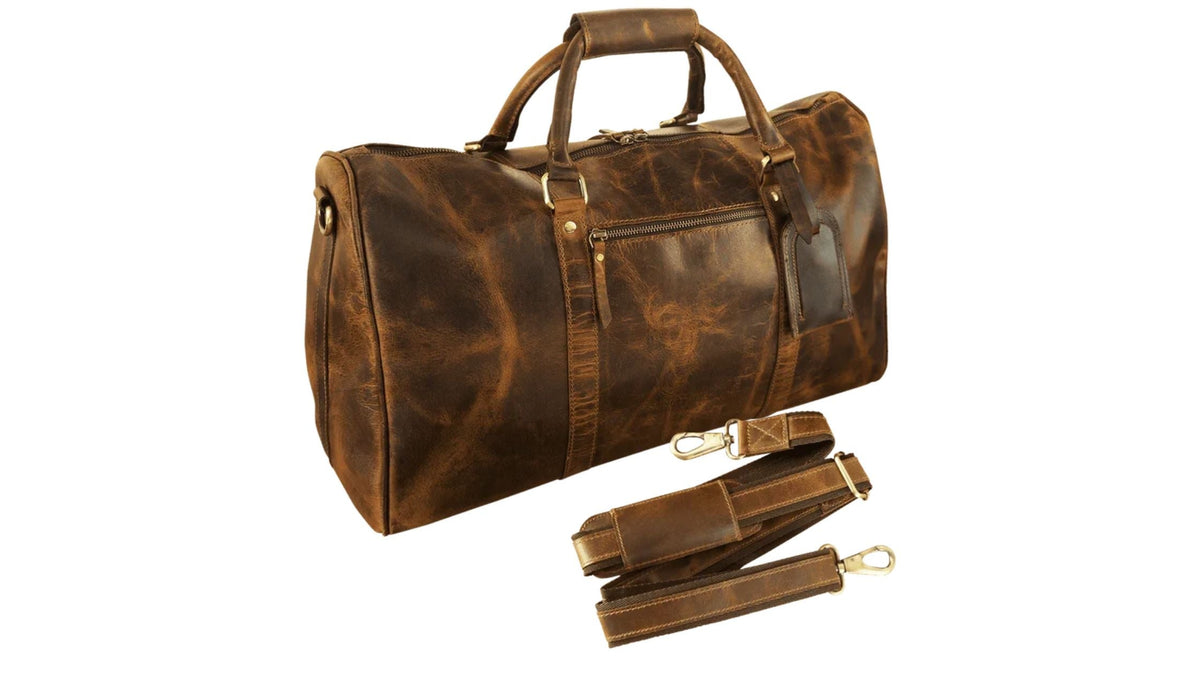
A duffle bag gets asked to do more than almost anything else in a travel wardrobe: hold a week's worth of clothes, survive an overhead bin or a baggage carousel, and still look presentable when it lands at a hotel or a client's office. A large full grain leather duffle bag is built for exactly that kind of demand, but size alone doesn't tell you whether a duffle is actually built to last.
Here's what to check before buying one, from the leather grade itself down to the hardware, pockets, and stitching most people never think to look at closely until the bag is already packed and halfway through a trip.
Why Size Alone Isn't the Right Starting Point
It's tempting to shop for a large duffle bag purely by dimensions, picking whichever one advertises the most cubic inches. But a bag's advertised capacity means very little if the material and construction can't actually support that volume once it's packed for a real trip.
A duffle loaded with a week's worth of clothing, shoes, and toiletries is heavy, and that weight puts sustained stress on the handles, the base, and every seam holding the bag together. The real question isn't how much a duffle can technically hold, it's whether it can carry that load, repeatedly, without the leather stretching out of shape or the stitching giving way.
What Full Grain Leather Actually Means for a Duffle Bag
A cowhide is made up of layers, and the top layer, the one closest to the animal's hair, is the densest and strongest part of the hide. Full grain leather uses that top layer exactly as it comes off the hide, with nothing sanded, buffed, or corrected away, which is what gives it the strength to handle a fully packed duffle bag without stretching or tearing at stress points.
Lower grades of leather, often labeled simply “genuine leather” or “corrected grain,” are cut from the weaker layers beneath that top surface, then treated and embossed to look consistent. They can look similar in a product photo, but they're a noticeably weaker foundation for a bag that's going to be packed heavy and hauled through airports for years.
Matching a Duffle to How You Actually Travel
A business traveler taking short, frequent trips has different needs than someone packing for a two-week vacation. The first is usually better served by a duffle sized for carry-on compliance, with quick-access pockets for a boarding pass and a laptop. The second benefits more from raw capacity and a wide-opening main compartment that makes packing for a longer trip less of a puzzle.
There's also a simpler case worth considering: if your travel needs vary from trip to trip, prioritizing leather quality and construction over a narrowly optimized size tends to serve better in the long run. A well-built full grain leather duffle in a genuinely large size flexes to handle a long weekend just as easily as a full week away.
How to Judge Real Capacity, Not Just Advertised Dimensions
Length, width, and depth only tell part of the story. Look at how the main compartment opens, a wide, full-length zipper that lets the bag lay open flat makes packing and unpacking far easier than a narrow opening that forces you to dig around inside.
Also check whether the bag has a rigid or semi-structured base. A duffle with a soft, unstructured bottom tends to sag and lose its shape once it's loaded, which makes it harder to fit into an overhead bin or stand upright on its own. A slightly reinforced base, sometimes fitted with metal studs to keep the leather off the ground, holds its shape under a full pack far better than a completely soft-sided design.
Why Weight Matters as Much as Volume
An empty duffle bag rarely tells you much about how it will perform loaded. Full grain leather itself has some natural weight to it, and a large duffle built entirely from thick leather can add several pounds before a single item goes inside, which matters for anyone flying with strict carry-on weight limits.
Some full grain leather duffles balance this by using leather selectively at stress points and panels while keeping the overall bag manageable, without sacrificing the durability that matters most. It's worth checking the bag's empty weight against its stated capacity before assuming bigger is automatically better for your specific travel style.
Hardware That Actually Holds Up to Travel
Zippers take more abuse on a duffle bag than on almost any other leather good, opened and closed at security checkpoints, hotel rooms, and gyms, often while the bag is fully loaded. YKK zippers are widely regarded as the standard for reliability, resisting snagging and jamming far better than generic hardware.
Solid brass fittings on the buckles, D-rings, and strap connectors matter just as much. Cheaper plated hardware tends to corrode or discolor after repeated exposure to airport conveyor belts, rain, and general handling, while solid brass ages the way full grain leather does, developing a bit of character rather than falling apart.
Pockets and Organization Worth Paying For
A large duffle bag benefits from a handful of well-placed pockets rather than a maze of small compartments. Exterior zippered pockets for items you need quick access to, a boarding pass, a phone, travel documents, save time at checkpoints and gate changes. An interior zippered pocket or slip pocket helps separate smaller items from the main compartment so they don't get lost in a bag full of clothing.
Some duffle bags, like the ELIZO Leather Duffle Bag, go a step further with built-in card holders and a dedicated phone pocket, which is a genuinely useful detail for anyone who travels light and wants essentials within reach without opening the main compartment.
The Trolley Strap Detail Frequent Flyers Shouldn't Skip
A removable trolley strap, a simple loop on the back of the bag that slides over a rolling suitcase handle, sounds minor until you're navigating a crowded terminal with a duffle bag in one hand and a carry-on in the other. Attaching the duffle directly to rolling luggage frees up a hand and reduces the strain of carrying a heavy bag over long distances between gates.
It's a small feature, but it's one of those details that separates a duffle bag designed around actual travel habits from one designed mainly to look good in a product photo.
A Feature Some Travelers Will Actually Use: The Dedicated Shoe Pocket
Packing shoes alongside clothing is a common source of frustration, since shoes take up awkward space and can transfer dirt onto everything else in the bag. Duffle styles built with a separate shoe compartment, like the Drift Moor Collection Duffle Bag, solve that problem directly, keeping footwear isolated from clothing without needing a separate bag.
It's not a feature every traveler needs, but for anyone who regularly packs gym shoes, dress shoes, or hiking boots alongside clothing, it's worth prioritizing over a duffle that only offers one large, undivided compartment.
Full Grain vs Genuine Leather: What the Label Doesn't Tell You
As the team at Beckett Simonon explains, full grain leather is considered the top quality tier of leather available, prized for its strength, breathability, and ability to age gracefully with basic care over years of use. Genuine leather, despite the reassuring name on the tag, is a lower grade cut from the layers beneath the full grain top, then treated to look more consistent than it actually performs under real stress.
For a bag that's going to be packed heavy and hauled through airports, train stations, and hotel lobbies, that difference in strength isn't cosmetic, it's the difference between a duffle that holds its shape for a decade and one that starts sagging and cracking within the first year of regular travel.
A Quick Checklist Before You Buy
Before finalizing a purchase, confirm the leather is described as full grain rather than simply “leather” or “genuine leather,” check for YKK zippers and solid brass hardware, look for a reinforced or slightly structured base, and count the pockets against what you'd actually use rather than what looks impressive in a listing.
It's also worth checking the strap and handle stitching specifically, since those are the points that carry the full weight of a packed bag. Reinforced stitching at the handle base is a strong sign the rest of the bag was built with the same attention to detail, and it's usually visible enough to check in a product photo before you buy.
Caring for a Large Leather Duffle Bag
A full grain leather duffle bag needs relatively little upkeep to hold up over years of travel. Wipe off dust and surface dirt with a dry or slightly damp cloth after trips, and let it air dry naturally if it gets caught in rain, away from direct heat sources like a radiator or a car's rear window.
Condition the leather every few months, more often if it travels frequently, to keep it from drying out under repeated exposure to airplane cabin air and varying climates. Avoid overpacking it consistently beyond what its handles and base are designed to support, and the leather will reward that basic care by aging into a bag that looks more distinguished with every trip rather than more worn out.
Conclusion
A large full grain leather duffle bag earns its price tag by handling exactly the kind of repeated, heavy use a travel bag is meant for, provided it's actually built from the right leather grade, with hardware and stitching that can support a full pack trip after trip. Checking those details before buying, rather than shopping on size and style alone, is what determines whether the bag is still traveling with you a decade from now.
The best large duffle isn't necessarily the one with the most compartments or the biggest advertised capacity. It's the one built to carry real weight, real distance, and real weather without the leather or the hardware giving out first.
That combination of durability and daily usefulness is exactly what separates a duffle bag that becomes a genuine travel companion from one that gets replaced after a single overseas trip, and it's worth the extra few minutes of research before checking out.
Carry Elizo
Elizo's Leather Duffle Bag Collection is handcrafted from premium full grain leather, engineered for travelers who need a bag built for repeated, heavy use rather than the occasional weekend trip. From the classic Antique Leather Duffle Bag with its built-in card and phone storage to the shoe-pocket-equipped Drift Moor Collection Duffle, every piece is finished with YKK zippers and solid brass hardware built to last for years of regular travel.
Pair it with a piece from the Leather Toiletry Bag Collection to round out a full travel set, or browse the complete Full Grain Leather Collection and Men's Collection to find the pieces built to travel as long as you do.
Frequently Asked Questions
Q: What size duffle bag is considered large?
A: Large duffle bags typically run in the 24 to 30 inch range, suited for week-long trips, checked luggage use, or anyone who prefers extra packing room over a compact carry-on.
Q: Is a full grain leather duffle bag good for frequent travel?
A: Yes. Full grain leather is built to withstand repeated handling, weather exposure, and heavy packing, which makes it well suited to frequent travel rather than occasional use.
Q: What hardware should I look for on a leather duffle bag?
A: YKK zippers and solid brass fittings are widely regarded as the most reliable choices, resisting jamming, corrosion, and discoloration better than generic hardware.
Q: How do I keep a leather duffle bag from sagging when packed?
A: Choose a duffle with a reinforced or semi-structured base, and avoid consistently overpacking it beyond what the handles and base are designed to support.
Q: How often should a leather duffle bag be conditioned?
A: Roughly every few months for a bag used regularly, or after trips involving significant weather exposure, to keep the leather from drying out.