
An everyday bag gets more use than almost anything else you own. It goes to work, gets dropped on the floor of the car, gets rained on, and carries whatever the day requires, which is exactly why the material matters more than the design. A full grain leather bag is built to absorb that kind of daily wear and actually improve with it, but not every leather bag on the market is built from full grain leather, and the difference isn't always obvious at first glance.
Here's how to actually evaluate a bag before you commit to carrying it every day, from the leather grade itself down to the hardware most people never think to check.
What “Everyday Use” Really Demands From a Bag
A bag you carry occasionally can get away with weaker materials. A bag you carry daily cannot. Everyday use means repeated loading and unloading, constant contact with zippers and clasps, exposure to weather, and the kind of casual abuse that comes from setting a bag down on rough surfaces without thinking twice.
Over months and years, that adds up to real structural stress on the seams, the handles, and the leather itself. Choosing the right bag starts with being honest about how hard you'll actually use it, then working backward to the materials and construction that can handle that.
Why the Material Question Comes Before Everything Else
It's tempting to shop for a bag the way you'd shop for a jacket, based mostly on how it looks. But a bag is a working object in a way a jacket usually isn't, it gets set on floors, stuffed with more than it was designed to hold, and exposed to weather without much warning. Style matters, but it's the material underneath that determines whether the bag you liked in the store still looks good a year later.
That's why it's worth settling the leather grade question before comparing colors, hardware finishes, or brand names. A beautiful bag built from a weak material is still a bag that will let you down, usually sooner than expected.
Step 1: Decide How You Actually Carry Things
Before comparing leather grades, figure out the carry style that fits your routine. A messenger bag suits anyone who commutes with a laptop and wants quick, one-handed access. A duffle bag fits weekend trips, gym sessions, or anyone who needs more volume without the structure of a briefcase. A tote works well for anyone who prioritizes an open top and easy access over rigid organization.
There's no universally correct answer here. The right bag is the one that matches how you actually move through a day, not the one that looks best in a product photo.
Step 2: Check the Leather Grade Before Anything Else
Once you know the style, check the leather grade before you look at anything else. Full grain leather uses the top, densest layer of the hide with the natural grain left intact. It's the strongest available grade, and it's the only one that develops a genuine patina rather than simply wearing thin.
Lower grades, often labeled “genuine leather” or “corrected grain,” are cut from the layers beneath that top surface, then coated and embossed to look consistent. They're real leather, but they're a noticeably weaker foundation for a bag that's going to see daily use for years.
Step 3: Match Size to What You Actually Carry
An oversized bag encourages you to overfill it, which stresses seams and handles well beyond their intended load. An undersized bag gets left behind because it can't hold what you need on a normal day. Before buying, list out what actually goes in your bag on a typical weekday, and size accordingly rather than buying for a hypothetical worst case.
Bags like the Leather Duffle Bag are worth checking against real dimensions, not just a general size label like “large” or “compact.”
Step 4: Look at the Hardware and the Stitching
Leather grade matters, but a bag is only as strong as its weakest connection point. Check the zippers for smooth, consistent action rather than snagging. Check the stitching at stress points, the base of the handles, the corners of the main compartment, for even, tight rows with no loose or skipped threads.
Good hardware and stitching are what allow full grain leather to actually deliver on its durability. Excellent leather paired with weak zippers or thin thread is still a bag that fails early, just at a different point than expected.
Why Weather Resistance Matters More Than It Seems
An everyday bag inevitably gets caught in rain at some point, whether during a commute or an unplanned errand. Full grain leather has a natural degree of water resistance thanks to its tight fiber structure, and it tolerates the occasional light rain far better than untreated fabric or lower leather grades that absorb moisture unevenly and can warp or stain as a result.
That's not a reason to skip basic precautions during heavy weather, but it does mean a full grain leather bag is far more forgiving of the kind of everyday exposure a bag realistically faces than most people assume before they actually own one.
Step 5: Think About How the Bag Will Age, Not Just How It Looks New
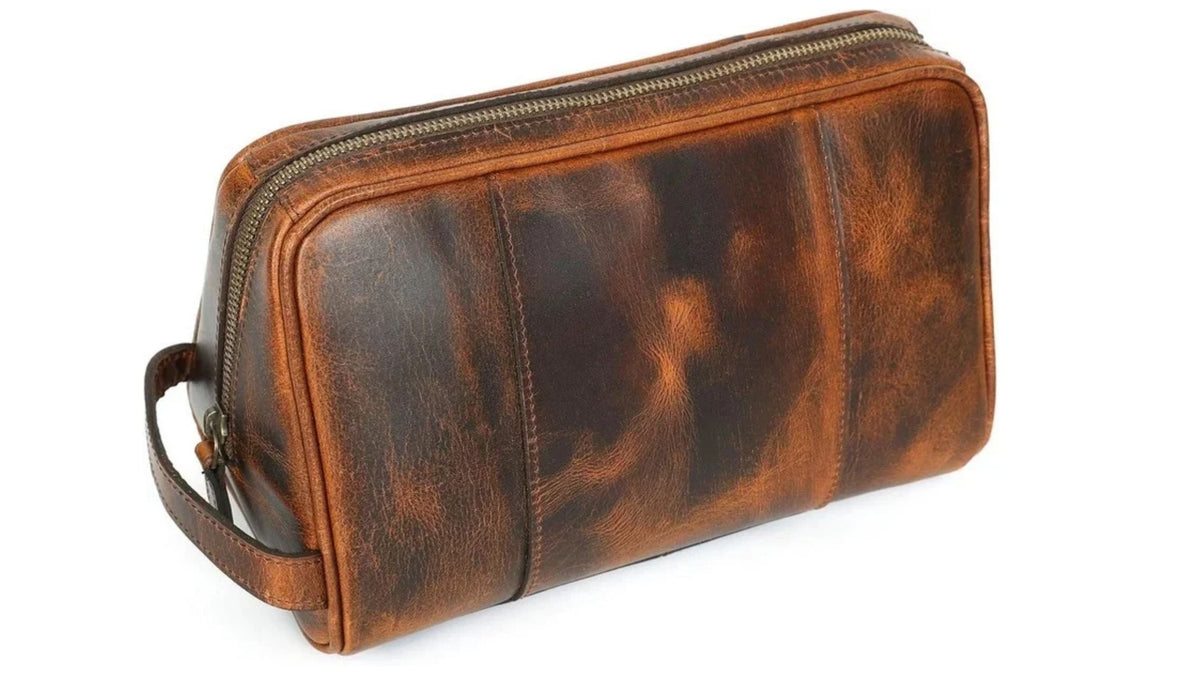
Full grain leather is meant to change over time. It darkens, it softens slightly, and it picks up small marks that become part of the bag's character rather than damage to hide. If you're choosing a bag purely based on how uniform and unmarked it looks on day one, you may be evaluating it by the wrong standard.
The better question is whether the bag will look better in three years than it does today. Full grain leather answers yes. Corrected or coated leather generally answers no, since its surface coating is what cracks and peels with age rather than developing a patina.
Common Mistakes People Make When Buying an Everyday Bag
The most common mistake is buying based on appearance alone, then discovering within months that the stitching is fraying or the leather is peeling at the corners. A bag that looks similar to a full grain option in a photo can be built from an entirely different, weaker material, and the difference often isn't obvious until it's already failing.
Another common mistake is buying a bag that's larger than what's actually needed, on the theory that more room is always better. In practice, an oversized bag gets overfilled, and an overfilled bag puts more strain on its handles and seams than the same bag carried at a reasonable capacity. Sizing to actual daily needs, rather than a hypothetical worst case, extends the life of the bag considerably.
Matching a Bag to Your Profession or Lifestyle
A consultant who travels weekly and works from a laptop most of the day has different needs than someone who splits time between a workshop and a job site. The first is generally better served by a structured messenger bag with a padded laptop compartment and quick-access pockets for a phone, badge, and travel documents. The second often needs the raw volume and simpler structure of a duffle, something that can be tossed into a truck bed without worrying about a rigid frame.
There's also a middle case worth mentioning: anyone whose routine genuinely varies day to day benefits from owning one versatile bag rather than several specialized ones. In that scenario, prioritizing leather quality and construction over a narrowly optimized feature set tends to serve better in the long run, since a well-built full grain leather bag flexes to fit more situations than a bag designed around one specific use case.
Full Grain, Top Grain, Genuine, and Bonded: Knowing the Difference
As the team at Beckett Simonon points out, full grain leather is considered the top quality tier for a reason: it's strong, breathable, water-resistant to a point, and built to last for years with basic care. Top grain leather is similar but has its surface sanded down for uniformity, trading some durability and patina potential for a more consistent look.
Genuine leather sits below both of those, made from the leftover layers once the top has been split away. Bonded leather is the lowest tier, made from scrap leather fibers pressed together with a binding agent, and it tends to wear out quickly regardless of how it's marketed. Knowing where a bag's leather actually sits in this hierarchy is the single most useful thing you can check before buying, and it's usually worth asking directly rather than relying on the word “leather” alone on a product tag.
A Quick Checklist Before You Check Out
Before finalizing a bag purchase, run through a short checklist: confirm the leather is described as full grain rather than simply “leather” or “genuine leather,” check that the handles are reinforced with stitching rather than rivets alone, look for smooth, snag-free zipper action, and measure the bag's actual dimensions against what you carry on a typical day rather than trusting a size label like “large” or “compact.”
This kind of quick diligence takes only a few minutes at the point of purchase, but it's what separates a bag that's still in daily use five years from now from one that needs replacing before the year is out.
Caring for a Full Grain Leather Everyday Bag
Routine care for a full grain leather bag is straightforward. Wipe off surface dust and dirt with a dry or slightly damp cloth, let the bag dry naturally away from direct heat if it gets wet, and apply a leather conditioner every few months depending on how often it's used.
Avoid overloading the bag beyond what its straps and stitching are designed to hold, and give it the occasional rest rather than carrying it every single day without a break. None of this is high maintenance. It's the kind of basic care that keeps full grain leather looking better with each passing year.
Conclusion
Choosing the right full grain leather bag for everyday use comes down to matching carry style to your actual routine, confirming the leather grade before anything else, and paying attention to the hardware and stitching that hold the whole thing together. Get those right, and the bag becomes something you use for years rather than something you replace next season.
A little diligence at the point of purchase, checking the leather grade, the stitching, and the sizing against your real routine, pays off every single day the bag is in use, which for a well-built full grain leather bag can easily stretch into years rather than months.
It's worth remembering, too, that the best bag isn't necessarily the one with the most features. It's the one built from materials that hold up to exactly how you use it, day after day, without you having to think about it.
Carry Elizo
Elizo builds its bags from premium full grain leather, engineered for the kind of daily use that separates a bag worth keeping from one you'll be replacing within a year. Whether you need the structure of the Leather Messenger Bag Collection for the office or the versatility of the Leather Duffle Bag Collection for travel, every piece across the Men's Collection is designed to age well rather than wear out.
Explore the full Full Grain Leather Collection and find the bag built for how you actually spend your days.
Frequently Asked Questions
Q: What's the difference between full grain and top grain leather bags?
A: Full grain leather keeps the natural grain of the hide intact, while top grain leather has that surface sanded down for a more uniform look, at some cost to durability and patina.
Q: How do I know if a bag is really full grain leather?
A: Check the natural markings and slight texture variation across the surface. Perfectly uniform, artificial-looking texture is usually a sign of corrected or coated leather rather than full grain.
Q: Is a full grain leather bag worth it for daily commuting?
A: Yes. Daily commuting is exactly the kind of repeated stress full grain leather is built to handle, and it holds up far better over years of regular use than lower leather grades.
Q: How often should I condition a full grain leather bag?
A: Roughly every few months for a bag in regular use, or whenever the leather starts to feel dry to the touch.
Q: Does a full grain leather bag get heavier or stiffer with age?
A: No. It typically softens slightly with use while retaining its structure, rather than becoming stiffer or heavier over time.