
A Bible you carry to church, study at the kitchen table, and pack for every trip deserves protection that fits it like it was made for it. Choose the wrong leather Bible case, and your Bible slides around loose inside, or worse, you force it into a cover that runs too tight and strains the binding every time you open it. Either way, that poor fit wears down the spine and corners over the years. Get the fit right the first time, and the case guards your Bible for decades while looking better with age. Here is how to measure, compare, and choose with real confidence.
Why the Right Fit Matters More Than You Think
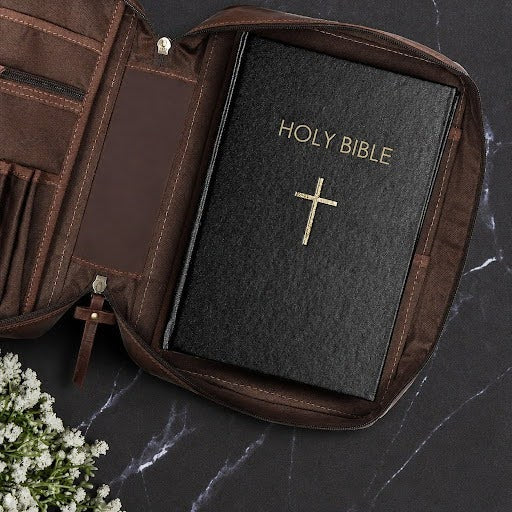
A Bible case does more than carry your Bible from one place to another. A snug, well-matched cover shields the spine, the corners, and the page edges from the bumps and scrapes of daily life, the exact spots that wear out first on an unprotected Bible. When the fit runs too loose, the Bible shifts and rubs against the leather every time you move, which slowly frays the very edges you set out to protect. When the fit runs too tight, you fight the cover open and closed, and that constant strain stresses the binding until the pages loosen. The right case lands in between, holding your Bible securely without squeezing it. That balance also makes a real difference in comfort, since a cover that fits well feels natural in your hands through a long sermon or study session.
Measure Your Bible Before You Shop
Guessing the size is the most common mistake, and it is the easiest one to avoid. Grab a tape measure or a ruler and record three numbers with your Bible closed: the height from top to bottom, the width from the spine to the outer page edge, and the thickness across the spine. Write all three down rather than trusting your memory. If you are unsure where to take the thickness, press the Bible closed and measure at its fullest point, usually the middle, where the pages bulge slightly, because a case that fits only the thinnest part will strain everywhere else. A few other details change the measurements, so account for them now. If your Bible wears a dust jacket you plan to keep on, measure with it on, and if you plan to remove it, measure without it. Note any extras that add bulk, too, like a thumb index, ribbon markers, or the thicker margins of a study Bible. Those few minutes with a ruler save you from the disappointment of a case that almost fits.
Match Your Numbers to the Right Case Size
Armed with your measurements, you can compare them against the size options most makers offer, usually small, standard, large, and extra-large. The goal is a case that matches your Bible’s height and width closely while leaving a little breathing room for thickness. Hold on to that distinction. A touch of extra room across the thickness is fine and even helpful, but extra height or width lets the Bible slide, which is exactly what you want to avoid. When your Bible falls right between two sizes, size up rather than down. A slightly roomy case still protects well and closes comfortably, while a case that runs even a little small forces a tight, binding-straining fit you will regret. If you are choosing a case as a gift and cannot measure the recipient’s Bible, a standard size suits the most common translations, though confirming the dimensions is always safer.
Pick the Closure and Style That Suit Your Routine
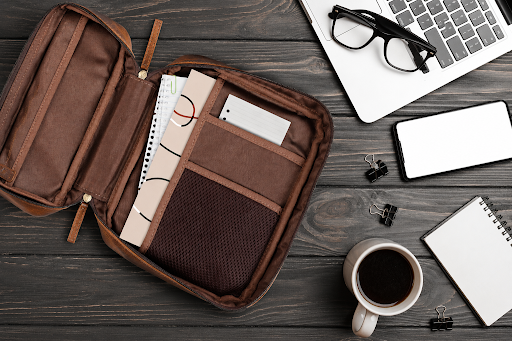
Fit handles the protection, and style handles how the case works for your life. Zippered cases wrap the Bible completely, sealing out dust and shielding every edge, which makes them a favorite for travel and for anyone who tosses their Bible into a busy bag. Snap and flap closures open faster, so they suit readers who reach for their Bible many times a day and value quick access over full enclosure. Think about how you carry it as well. Some cases add a handle for easy carrying, while others include pockets for a pen, notes, or a phone, turning the cover into a compact study kit. None of these choices is better in the abstract; they simply match different habits, so picture your own week and choose the case that fits how you actually use your Bible.
Why the Type of Leather Decides How Long It Lasts
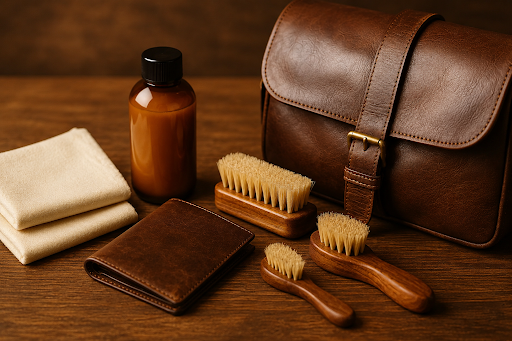
A Bible case earns its keep over years, not weeks, so the leather behind it matters as much as the fit. Full-grain leather, cut from the strongest top layer of the hide, resists scuffs and scratches and ages into a deep, handsome patina that many owners come to love. Bonded or coated faux leather, by contrast, tends to crack and peel within a few years, sending you shopping for a replacement far sooner than you hoped. Construction counts too. Strong, even stitching holds the case together through daily handling, and a soft interior lining cushions the cover and keeps it from scratching against the leather. If you want to understand how different leathers feel and wear, our guide to types of leather texture is a helpful primer, and our complete leather care guide explains how to keep whichever case you choose looking its best for the long haul.
Small Details That Separate a Great Case from an Average One
Once the fit and the leather check out, a few finer details tell you whether a case is built to last. Look at the stitching first, since tight, even stitches with no loose threads signal careful construction, while sloppy seams tend to fail at the corners. Check the edges next, because well-finished, burnished edges resist fraying far better than raw, rough-cut ones. The closure deserves attention, too. A zipper should glide without catching, and a snap should seat firmly rather than pop open on its own. Inside, run your hand along the lining, which should feel smooth and sit flat without bunching, so it cushions the Bible instead of scratching it. Finally, weigh the hardware in your mind, since sturdy zippers and snaps outlast the flimsy ones that bend or corrode within a year. None of these takes an expert eye to judge, and together they separate a case you will still carry in a decade from one you replace next spring.
Add a Personal Touch That Lasts
A Bible is one of the most personal things a person owns, and the case that protects it can reflect that. Monogramming a name or initials onto the leather turns a quality cover into a keepsake, the kind of gift people remember. A personalized Bible case carries real meaning at a baptism, a confirmation, a graduation, or an anniversary, marking the moment in a way a generic present never could. Even for yourself, a small engraving makes the case unmistakably yours among a pew full of similar Bibles. It is a simple touch, yet it transforms a practical cover into something you are proud to carry.
A Cover That Grows With Your Bible
Choosing the right leather Bible case comes down to three honest steps: measuring your Bible carefully, thinking about how you actually carry and use it, and picking leather built to last. Get those right, and your case will protect your Bible through years of study, worship, and travel while growing more beautiful with every page you turn. A well-chosen cover is not just protection; it becomes part of the story your Bible tells.
At Elizo, we handcraft our Bible cases from certified full-grain leather in a full range of sizes, with personalization available and a hassle-free warranty behind every stitch. Browse our leather Bible covers for a perfect everyday fit, explore our Bible cases built for study and travel, and add a name or initials through our personalized gifts for a cover that means something.
Questions People Ask
How do I measure my Bible for the right case size?
Measure the closed Bible’s height, width, and thickness with a ruler, and include any dust jacket you plan to keep on. Match those numbers to the case sizes, leaving a little room only for thickness.
What should I do if my Bible falls between two case sizes?
Size up rather than down. A slightly roomy case still protects well and closes comfortably, while a case that runs small forces a tight fit that strains the binding.
Are zippered Bible cases better than snap or flap styles?
Neither is better outright. Zippered cases fully enclose the Bible and suit travel, while snap and flap styles open faster and suit readers who reach for their Bible often.
Can I personalize a leather Bible case as a gift?
Yes. Monogramming a name or initials turns a quality case into a keepsake, which makes it a meaningful gift for baptisms, graduations, and anniversaries.
How do I care for a leather Bible case so it lasts?
Keep it dry, wipe away dust, and condition the leather occasionally to prevent drying and cracking. Full-grain leather responds especially well to simple, regular care.