

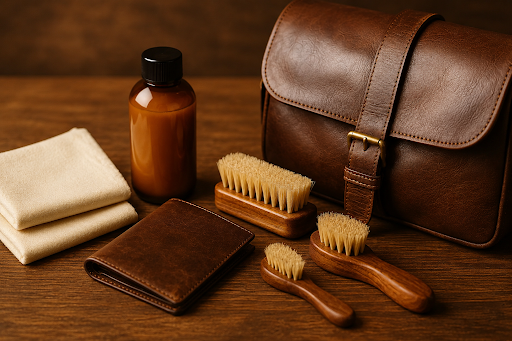
One of the best arguments for buying full-grain leather over any other material is what happens after years of use. A well-maintained full-grain leather bag looks better at year five than it did at purchase; the leather develops a patina, deepens in color, and takes on a character that you can't buy new.
But "well-maintained" is the qualifier. Full-grain leather is durable, but it's not maintenance-free. The difference between a leather bag that lasts a decade and one that cracks and dries out by year two is mostly a matter of basic care that takes 15 minutes per year.
This guide covers everything you need to know about caring for full-grain leather products, bags, wallets, desk accessories, and everything else.
The Core Principle: Leather Is Skin
Leather is tanned animal hide. It has the same basic needs as skin: it responds well to moisture and conditioning, and it degrades when it gets dried out, over-saturated, or exposed to harsh chemicals. Once you understand that, leather care becomes intuitive.
Step 1: Day-to-Day Leather Maintenance
Wipe Down After Use
Full-grain leather is naturally resistant to light moisture, dust, and minor scuffs, but you shouldn't let things accumulate. After a rainy commute or a particularly dusty day, wipe the leather surface with a clean, soft, dry cloth. A microfiber cloth works well.
· What not to use: Paper towels (too abrasive), baby wipes (contain chemicals not suited for leather), household cleaners.
Deal With Spills Immediately
If liquid gets on your leather bag or wallet, blot, don't rub, with a dry cloth. Blotting absorbs the liquid; rubbing pushes it into the grain and can cause water staining.
After blotting, let the leather air dry naturally at room temperature. Never use a hairdryer, radiator, or direct sunlight to speed up drying; heat causes leather to crack and become brittle.
Handle With Dry Hands
This one sounds small but matters over time. Oils and products on your hands transfer to leather with repeated handling. Most of these are harmless, but hand sanitizer and other alcohol-based products can dry out leather with repeated contact.
Step 2: Conditioning (Every 3–6 Months)
Conditioning is the single most important thing you can do to extend the life of full-grain leather. Leather naturally loses moisture over time, especially in dry climates or air-conditioned environments. When leather dries out, it becomes stiff, then brittle, then cracks.
Conditioning replenishes the moisture content and keeps the leather supple.
How to Condition Leather
1. Step 1: Clean the leather first. Use a leather cleaner (see below) or a lightly dampened cloth to remove surface dirt. Let dry completely.
2. Step 2: Apply a small amount of leather conditioner to a clean, soft cloth, not directly to the leather.
3. Step 3: Work the conditioner into the leather using circular motions. Cover the entire surface, including seams and edges.
4. Step 4: Let the conditioner absorb for 20–30 minutes, then buff gently with a dry cloth to remove any excess.
Recommended Leather Conditioners
· Leather Honey, one of the most widely trusted leather conditioners. Works on bags, wallets, furniture, boots, and virtually any full-grain leather item. A small bottle lasts for years. Deeply penetrating formula.
· Chamberlain's Leather Milk, A lighter conditioner, good for finer leathers and items you want to condition more frequently. Popular for wallets and accessories.
· Bickmore Bick 4, A conditioner and cleaner in one. Good for maintenance between deeper conditioning sessions.
· What to avoid: Products with silicone, wax-based products applied too heavily (they can clog pores), mink oil (can darken leather more than expected), and petroleum-based products.
How Often to Condition
· Bags used daily: Every 3–4 months
· Wallets (pocket leather): Every 4–6 months, body heat and pocket friction keep these somewhat conditioned naturally
· Desk accessories (desk pads, portfolios): Every 6 months or when the leather looks dry
· Items in storage: Condition before storing; check and recondition after 6+ months in storage
Step 3: Cleaning (As Needed)
Full-grain leather rarely needs deep cleaning if you wipe it down regularly. When it does:
For Light Surface Dirt
Use a very slightly dampened cloth with plain water. Wipe gently, then immediately follow with a dry cloth. Allow to air dry.
For Pen or Ink Marks
Rubbing alcohol applied sparingly on a cotton ball can remove ink; test on an inconspicuous area first. Work from the outside of the stain inward. Follow with conditioning.
For Oil or Grease Marks
Sprinkle a light layer of cornstarch or talcum powder on the stain and let it sit for a few hours (or overnight). The powder absorbs the oil without spreading it. Brush off gently with a soft cloth, then condition.
For Mold or Mildew
Mix equal parts rubbing alcohol and water. Apply with a soft cloth, then allow to dry completely. Follow with conditioning. Store in a well-ventilated location and avoid plastic storage bags (which trap moisture).
Step 4: Storage
How you store leather matters as much as how you clean it.
· Keep leather in a cool, dry, ventilated location. Avoid basements (too damp), attics (too hot and dry), or anywhere with direct sunlight.
· Don't store in plastic bags. Leather needs to breathe. Plastic traps moisture and can cause mold. Use a cloth dust bag or leave items in the open air.
· Stuff bags when storing. For leather bags, fill the interior with tissue paper or packing paper to maintain the bag's shape during storage.
· Avoid stacking. Stacking leather items on top of each other can cause creasing and pressure marks over time.
What Full-Grain Leather Does Over Time: Patina
Here's the payoff for all of this: full-grain leather develops a patina, a natural darkening, deepening, and enriching of the leather's color and texture that comes from years of handling and use.
Patina is what makes a 20-year-old leather briefcase more beautiful than a new one. It cannot be faked, it cannot be rushed, and it is only possible on genuine full-grain leather, genuine leather, and PU leather, which just crack and peel instead.
An Elizo leather bag cared for properly will look better in year seven than it did the day you received it. That's the case for investing in real material.
Frequently Asked Questions
How do I clean a leather bag?
For routine cleaning, wipe the leather surface with a clean, dry, or slightly damp cloth. For deeper cleaning, use a leather-specific cleaner applied with a soft cloth, then follow with a leather conditioner to restore moisture. Avoid harsh household cleaners, baby wipes, or anything containing alcohol or bleach. After any wet cleaning, let the leather air dry naturally; never use heat.
How often should I condition leather?
Full-grain leather bags and accessories should be conditioned every 3–6 months, depending on use frequency and climate. In dry climates or air-conditioned environments, condition every 3 months. For items used occasionally, every 6 months is sufficient. You'll know conditioning is needed when the leather feels stiff, dry, or looks matte rather than having its natural luster.
What is the best leather conditioner?
Leather Honey and Chamberlain's Leather Milk are consistently top-rated by leather goods enthusiasts. Both penetrate the leather deeply, are safe for full-grain leather, and last for months per application. Avoid petroleum-based products, silicone sprays, and mink oil (which can darken leather significantly).
Can leather get wet?
Full-grain leather can handle light rain and moisture; it's naturally water-resistant. If it gets thoroughly wet, blot away excess water with a dry cloth and allow to air dry at room temperature, away from heat sources. After the leather is completely dry, condition it; wetting and drying can strip some natural oils. Do not use a hairdryer or place it near a heater to speed drying.
Does full-grain leather scratch easily?
Full-grain leather can get surface scratches from sharp objects, but many minor scratches can be minimized by rubbing gently with a clean fingertip; the natural oils in your skin help blend them into the leather grain. Conditioning helps prevent and minimize surface scratching. Unlike coated leathers, scratches on full-grain leather often become less visible over time rather than worse.
How do I remove a stain from a leather wallet or bag?
For ink stains: rubbing alcohol applied sparingly on a cotton ball, working from the outside of the stain inward. For oil/grease: cornstarch or talcum powder left on the stain for several hours to absorb the oil, then brushed away. For water stains: dampen the entire surface evenly with a slightly wet cloth (not just the stain) so the leather dries uniformly. Always condition after treating any stain.