
Most men have owned this kind of travel bag at least once. It looks sharp in the store, survives a few weekend trips, and then a seam splits on the way through an airport or the zipper gives out halfway through packing. Then there is the other kind of bag, the full-grain leather duffle bag men hand down to their sons, still carrying clothes 30 years after its first trip. Both bags may cost money, and both may call themselves leather, yet only one of them earns a permanent place in the closet.
So what separates a bag you replace every few years from one you carry for decades? The answer comes down to three things: the grade of leather, the way the bag is built, and the small habits that keep it in shape. Once you understand all three, you can spot a lifetime bag in about a minute.
Most Duffle Bags Have an Expiration Date
Cheap duffle bags rarely fail all at once. They wear out one weak point at a time. Bonded leather starts to crack along the folds, a PU coating peels away from the corners, the stitching at the handles loosens, and a plated zipper pull snaps off. Each problem looks minor on its own, but together they push the bag into the trash within a few years.
Travel does not make things easier on a bag. Baggage handlers toss bags onto belts, overhead bins crush them, and car trunks scrape them. According to SITA's latest Baggage IT Insights report, damaged bags make up about a fifth of all mishandled baggage worldwide. A bag built from weak materials simply cannot keep up with that kind of treatment for long.
There is also the cost to think about. A budget bag that you replace every three years costs you far more over three decades than one well-made bag bought once. The cheap option only looks cheap on the day you buy it.
What Full Grain Leather Really Means
Leather comes in grades, and the grade tells you more about a bag's future than any other detail. Full grain leather keeps the entire top layer of the hide, the part with the tightest and strongest fibers. Tanners leave this surface intact rather than sanding it down, so the leather keeps its natural strength and its natural grain.
Here is how the common grades compare:
- Full grain: the whole top layer, untouched. The strongest, most durable option, and the only grade that develops a rich patina.
- Top grain: the top layer with the surface sanded and refinished. Smoother and more uniform, but a little weaker and slower to age well.
- Genuine leather: a lower layer of the hide, often coated or embossed to look like better leather. It tends to crack and peel at stress points.
- Bonded leather: scraps of leather fiber glued together with a coating on top. It looks fine at first and falls apart quickly.
Many shoppers assume the phrase genuine leather signals quality, but it usually points to one of the lower grades. Elizo's guide to real vs fake leather explains this misconception well, and it is worth reading before you spend money on any leather bag. If a product page does not say full grain plainly, you should assume it is something less.

The Build Details That Decide How Long a Bag Lasts
Great leather can still end up in a poorly made bag. The construction matters just as much as the hide, and a few details tell you almost everything.
Stitching and Seams
Look for heavy, waxed thread and a tight, even stitch line. The handles and strap anchors carry the full weight of a packed bag, so a quality maker reinforces these points with extra stitching or rivets. Loose threads or wandering seams on a new bag only get worse with use.
Hardware That Won't Quit
Zippers, buckles, and D rings take constant stress. Solid brass or heavy metal hardware holds up for decades, while thin plated alloys bend, chip, and corrode. A zipper that feels gritty or catches in the store will fail on the road.
Lining, Base and Straps
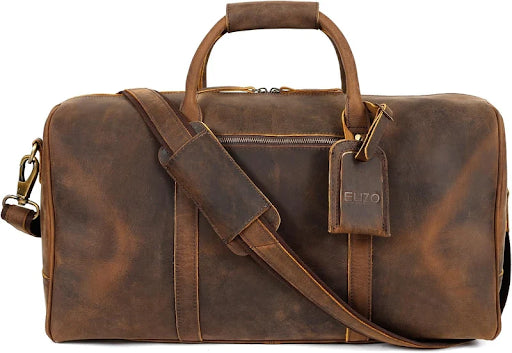
A durable lining protects the inside of the leather and keeps clothes clean. A structured base or metal feet lift the bag off wet floors and stop the bottom from sagging. A padded, adjustable shoulder strap makes a heavy bag comfortable to carry through a long terminal walk, and it saves your shoulder on every trip.
Patina: The Part Men Love Most
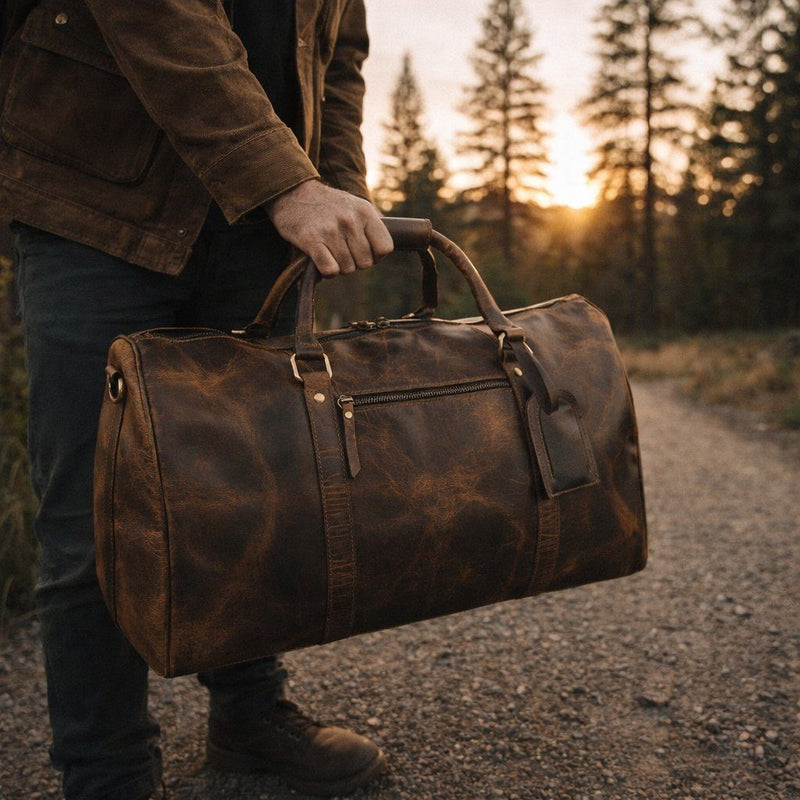
Here is where full-grain leather pulls far ahead of every other material. Over months and years, the leather absorbs oils from your hands, light from the sun, and the small knocks of travel. The color deepens, the surface softens, and a natural sheen appears on the handles and edges. Leather workers call this patina.
Patina turns a bag into something personal. That faint scuff from a mountain cabin trip or the darker patch where your hand always grabs the handle becomes part of the bag's character. Elizo's guide to how leather patina develops walks through the process in detail. Synthetic bags and coated leathers cannot do this. They only look older, never better.
Matching the Bag to the Way You Travel
The best duffle for you depends on how you actually use it. A bag that fits your routine gets used, and a bag that gets used earns its patina.
- Weekend getaways: a mid-size duffle holds two or three days of clothes plus shoes without looking bulky.
- Gym and work: a smaller bag with a separate shoe pocket keeps sweaty gear away from clean clothes.
- Air travel: a carry-on-sized duffle lets you skip checked baggage entirely and keeps your bag out of the baggage system.
- Road trips: a larger duffle swallows extra layers and gear, and it fits easily into a trunk or back seat.
If you fly often, check your airline's carry-on limits before you buy. Many US carriers cap carry-ons at around 22 by 14 by 9 inches, and a soft duffle squeezes into overhead bins more easily than a hard case. Elizo's Drift Moor leather duffle bag with shoe pocket is a good example of a carry-on-friendly size that still handles a full weekend.
Care Habits That Add Years to Your Bag
Full-grain leather asks for very little, but a few simple habits make a big difference over the decades.
- Wipe the bag down with a soft, dry cloth after each trip to remove dust and grit.
- Condition the leather every few months, or more often in dry climates, to keep it supple.
- Keep it away from direct heat such as radiators, heaters, and hot car dashboards.
- Store it lightly stuffed with paper or a towel so it holds its shape, and use a breathable dust bag rather than plastic.
- After rain, blot off water and let the bag air dry naturally at room temperature.
If a spill or a long trip leaves its mark, do not panic. Most marks on full grain leather fade or blend into the patina with time and a little conditioner. Elizo's complete leather care guide covers cleaning, conditioning, and storage step by step.
Full Grain Leather vs Nylon and Canvas Duffles
Nylon and canvas duffles have their place. They weigh less and cost less, and they suit a gym locker or a camping trip well. But they lose their shape, fray at the seams, and absorb odors over time. Most of them end up looking tired within a few years of regular use.
A full-grain leather duffle weighs a little more and costs more at the start. In return, it holds its structure, resists abrasion, and looks better each year you carry it. It also works in more settings. A leather duffle looks right at a hotel check-in, a business trip, or a family wedding, places where a gym bag would feel out of place. For men who travel regularly, that versatility alone justifies the investment.
Packing Smart With a Leather Duffle
A duffle carries best when you pack it with a plan. Roll soft clothes instead of folding them, since rolled clothes fill the round shape of a duffle better and wrinkle less. Put shoes in a dedicated pocket or a cloth bag so they do not scuff the lining. Heavy items belong at the bottom and toward the center to keep the bag balanced on your shoulder.
Keep liquids sealed and separate. A leaking shampoo bottle is one of the few things that can truly harm the inside of a bag. A dedicated leather toiletry bag keeps bottles contained and makes your duffle easier to unpack at the hotel.
Conclusion
A bag that lasts for decades does not happen by accident. It starts with the right leather, continues with solid stitching and hardware, and depends on a few easy care habits. When all three come together, you end up with a full-grain leather duffle bag you can rely on for 20 or 30 years, one that looks better with every trip instead of worse. Buy it once, carry it often, and let the leather tell the story of where you have been.
Built to Travel for Decades: Elizo
Elizo is a Wyoming-based leather goods brand built around a simple idea it calls Luxury Engineered: premium full-grain leather, put together with the kind of construction that holds up to real travel. Each duffle bag uses reinforced stitching, solid hardware, and a structured design made to carry a full weekend's worth of gear, and every bag comes backed by Elizo's warranty.
Whether you need a carry-on companion for business trips or a roomy weekender for road trips, explore the Elizo leather duffle bag collection and find the bag you will still be carrying decades from now.
Frequently Asked Questions
How long does a full grain leather duffle bag last?
With basic care, a well-made full-grain leather duffle bag can last 20 years or more. The leather itself often outlasts the hardware, and a good leatherworker can replace a worn zipper or strap to extend its life even further.
Is a full-grain leather duffle bag too heavy for travel?
A leather duffle weighs more than a nylon one, but the difference is usually a few pounds. Most travelers find that the added durability, structure, and comfortable strap make up for the extra weight.
Can I carry a leather duffle bag on a plane?
Yes. Many leather duffles fit within standard carry-on limits, which are often around 22 by 14 by 9 inches on US airlines. Check your airline's size rules and pick a duffle sized for the overhead bin.
How do I protect my leather duffle bag from rain?
Full-grain leather resists light moisture, but it is not waterproof. Condition it regularly, blot off rain as soon as you can, and let it dry naturally away from heaters. A leather protectant spray adds extra defense if you travel in wet climates.
What is the difference between full grain and genuine leather duffle bags?
Full grain leather uses the strongest top layer of the hide with its natural surface intact. Genuine leather usually comes from lower layers with a coated or embossed surface, so it wears out faster and does not develop the same patina.